The Ngorongoro-Lengai Global Geopark, spanning roughly 12,000 km² of northern Tanzania, was formally revalidated by UNESCO in late 2025 following a multi-year infrastructure and capacity-building programme. It remains the only UNESCO Global Geopark in sub-Saharan Africa — a distinction that is as much about geoscience communication as it is about geology.
What makes the site globally significant
The geopark's flagship features read like a greatest-hits of East African geology:
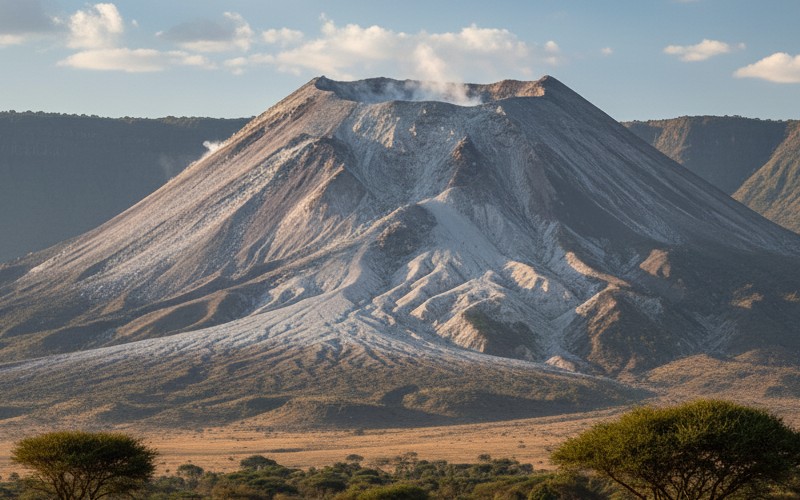
- Ol Doinyo Lengai, the world's only active carbonatite volcano, which erupts low-temperature natrocarbonatite lava unique on Earth.
- The Olduvai Gorge palaeontological sequence, where the Leakey family's work established East Africa as the cradle of humankind.
- The Ngorongoro Caldera, a 19 km-wide volcanic collapse structure supporting one of the densest wildlife populations on the continent.
Why revalidation matters
UNESCO Global Geopark status is not permanent. Sites are revalidated every four years, and a failure to demonstrate active geoconservation, community engagement, and scientific interpretation can lead to delisting. The reconstruction programme addressed visitor infrastructure, signage, and — critically for us — the geological interpretation panels and guided-geotrail content that translate complex stratigraphy for the public.
The geoscience-geotourism link
For a firm like ours, the geopark is a reminder that geological mapping has economic value beyond mining and foundations. A well-interpreted geological site drives tourism revenue, creates local jobs, and builds public literacy in the earth sciences. Several of the skills we deploy on exploration projects — structural mapping, stratigraphic correlation, 3D visualisation — translate directly into geotrail design and interpretive content.
FAQ
Q: How many UNESCO Global Geoparks are in Africa?
A: As of 2025, Ngorongoro-Lengai is the only one in sub-Saharan Africa. North Africa has sites in Morocco and Algeria. The gap reflects underinvestment in geoheritage, not a shortage of qualifying geology.
Q: Can a geopark coexist with mining?
A: Yes, with zoning. UNESCO's guidelines require the core geological heritage to be protected, but buffer zones can accommodate sustainable resource use if properly managed.
Source: Global Geopark in Tanzania revived with international aid